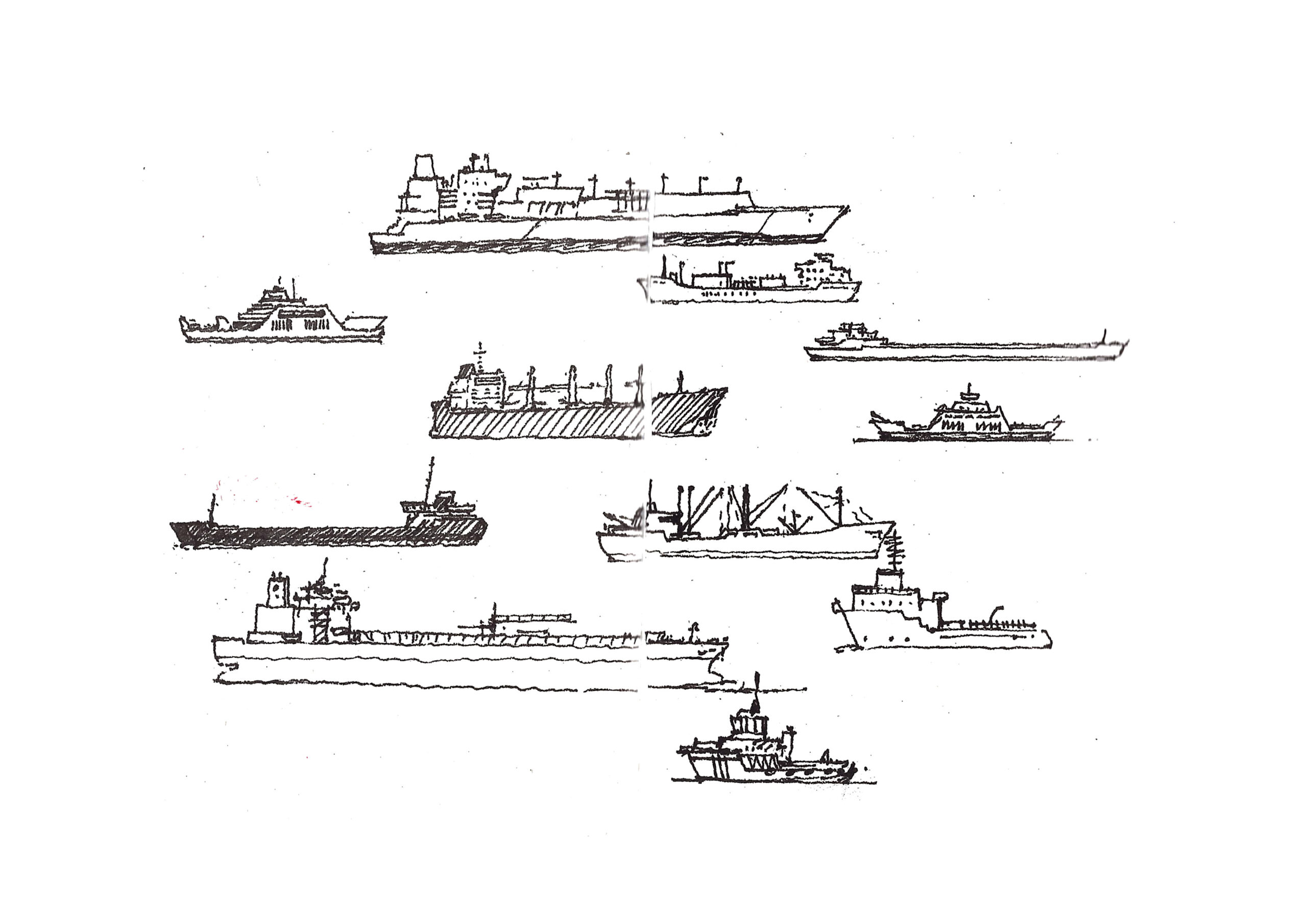


Since 2015, I have been sketching the streets and views of Istanbul that I wander through. They have piled up in notebooks of all sizes and on scraps of paper. Two years ago, I emptied the box in which I had stored all these notebooks onto the floor. I looked through them at length. I tried to understand why I had drawn these seemingly ordinary corners, bending streets, slopes, and stairways; the palm trees, birds, and cats that could be found in any Mediterranean city. The answer became a book: İstanbulin.
İstanbulin is the name of a men’s jacket that was fashionable in 19th century Istanbul. High-collared, buttoned to the waist, flaring slightly below it, an item that anyone would recognize from black and white photographs of Ottoman officers and palace dignitaries. Perhaps it was the first design product we ever exported from these lands. Over time, both the jacket and the word fell out of use. I wish for us to revive this musical, elegant word: İstanbulin. To use it as an adjective for the things that make Istanbul what it is, that belong to it, that are unique to it.
The İstanbulin book tells the story of the city, not through the history of its streets, palaces, and mosques; not by recounting who commissioned what, nor through sultans, pashas, or famous families.It poses not the question of which famous people once lived on a street, but rather what that street means to us today. In the stories of İstanbulin, the narrator is me. I walk through the city, telling about what I see, what happens to me, and what takes place around me, neither more or less, becoming the protagonist of my own tales.